
What Is Moral Injury and Why Is It So Common in Veterans and First Responders?
What Is Moral Injury?
There is a word that gets used a lot when we talk about the psychological toll of military service and emergency response work. That word is trauma. And trauma is real, and it matters, and it deserves every bit of the clinical attention it has received over the past several decades.
But there is something else that a significant number of veterans and first responders carry that does not fit neatly inside the trauma framework. Something that looks different, feels different, and responds to treatment differently. Something that has been present for as long as people have gone to war or run toward danger, but has only relatively recently been given a name.
That name is moral injury.
Moral injury refers to the damage done to a person’s conscience, sense of self, and fundamental beliefs about right and wrong when they participate in, witness, or fail to prevent something that violates their deeply held moral code. It is not primarily a fear response. It lives in the part of a person that knows the difference between right and wrong. And when that part of a person has been exposed to something that crossed a line, the wound it leaves is not fear. It is guilt. Shame. A sense of having betrayed something fundamental about who you believed yourself to be.
If you have served in the military or worked as a first responder and something about your experience has never quite fit the PTSD conversation, this may be the piece that has been missing.
How Is Moral Injury Different From PTSD?
This distinction matters because the two conditions, while they often coexist, are not the same thing. And treating one without recognizing the presence of the other produces incomplete results.
PTSD is fundamentally a disorder of threat response. The nervous system becomes stuck in a state of hyperarousal, replaying experiences as though the danger is still present. Avoidance, hypervigilance, intrusive memories, emotional numbing, these are the signatures of a system that learned to protect itself and does not know how to stand down.
Moral injury is fundamentally a disorder of meaning. It does not primarily present as fear. It presents as a collapse of the frameworks a person used to make sense of themselves and the world. The person struggling with moral injury is not primarily asking whether they are safe. They are asking whether they are good. Whether they can be forgiven. Whether they deserve to be.
The hallmarks of moral injury include deep shame, persistent guilt, a sense of spiritual or existential crisis, difficulty trusting institutions or authority figures that were supposed to uphold moral standards and did not, withdrawal from relationships, loss of faith in things that previously provided meaning, and an inability to forgive oneself for something that happened in the past.
It also often includes a particular kind of silence. Because the things that caused the moral injury are frequently the things a person finds hardest to talk about. Not because they are afraid of the memory, but because they are afraid of what the memory says about them.
What Causes Moral Injury in Veterans and First Responders?
Military service and emergency response work are, by their nature, environments in which morally complex situations are not the exception. They are the job.
Soldiers are asked to make decisions in fractions of seconds that would take ethicists years to fully analyze. They operate under rules of engagement that do not always map cleanly onto the moral instincts of a human being trying to do the right thing. They witness things that no amount of training fully prepares a person to witness. They sometimes make mistakes with irreversible consequences. And they sometimes follow orders that they later come to believe were wrong.
First responders carry their own version of this. The paramedic who could not save a child. The firefighter who had to make an impossible choice about who to reach first. The police officer who used force in a situation that still does not feel resolved. The dispatcher who received a call they could not get help to in time. These are not abstract moral dilemmas. They are experiences that live in a person’s body and memory long after the shift ends.
What makes moral injury particularly likely in these professions is the combination of high moral stakes, limited control, institutional pressure to act in ways that may conflict with personal values, and a culture that does not easily make room for the kind of processing these experiences require. Service members and first responders are trained to move forward. To complete the mission. To be ready for the next call. What they are rarely trained to do is sit with what something cost them, and what it might mean about who they are.
What Is Betrayal-Based Moral Injury?
One form of moral injury that deserves particular attention is what researchers call betrayal-based moral injury. This occurs when the transgression did not come from the individual’s own actions but from the actions of leaders, institutions, or systems they trusted.
A soldier who followed orders and later learned those orders were based on false information. A first responder who reported misconduct and was punished for it. A veteran who sought help through official channels and was failed, dismissed, or left to wait while their condition worsened. A service member who witnessed leadership protecting the organization at the expense of the people it was supposed to serve.
When the institution you served with your whole self turns out to have been something less than what you believed it was, the wound is not just personal. It reaches into the foundations of meaning that service was built on. The mission. The code. The belief that what you were doing mattered and that the people in charge of it were worthy of the trust you placed in them.
That kind of injury is particularly hard to heal because it calls into question not just a single event but the entire framework that gave a career in service its meaning.
What Is the Connection Between Moral Injury and Substance Use?
This is where it becomes especially important for anyone who is struggling with both.
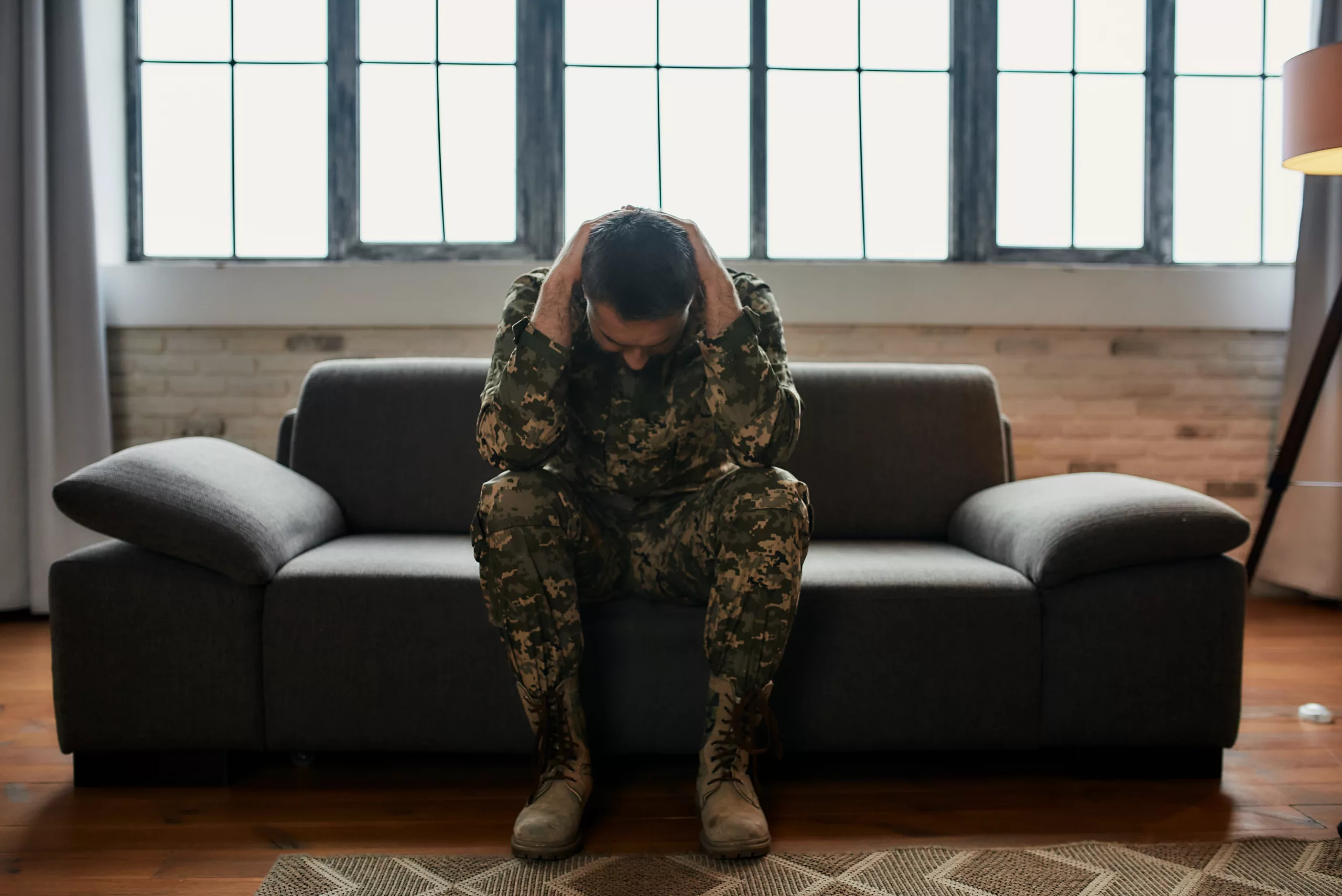
Moral injury is painful in a way that is qualitatively different from other kinds of psychological pain. It is not the pain of fear or loss. It is the pain of self-condemnation. Of believing, at some deep level, that you are not the person you thought you were. That you did something unforgivable. That you do not deserve the things other people seem to take for granted, including peace, connection, and a life that feels worth living.
Substances offer a way to not feel that. Alcohol in particular quiets the self-evaluating part of the mind that keeps returning to the thing that cannot be undone. It does not fix anything. It does not resolve the injury. But it provides hours of relief from a pain that has no obvious remedy, and for someone who has been carrying that pain for years without any framework for understanding it or any path toward healing it, that relief is significant.
The problem is that the relief is temporary and the long-term costs are severe. And the underlying moral injury, untouched by treatment that does not know to look for it, remains exactly where it was. Which is why people can complete substance use treatment and relapse not because the treatment failed but because the thing driving the use was never directly addressed.
Can Moral Injury Be Treated?
Yes. And this is the part that matters most, because moral injury is real and serious and it is also something people heal from.
The healing does not usually look like processing trauma memories, which is the primary work of treatments like EMDR or prolonged exposure. Those approaches are often helpful for PTSD but do not directly target what moral injury requires.
What moral injury requires is something closer to a reckoning. A process of being able to look honestly at what happened, to understand the context in which it happened, to grieve what was lost, and to find a path toward self-forgiveness that does not require pretending the event did not matter.
Approaches that have shown promise include adaptive disclosure therapy, which was specifically developed for moral injury in military populations, as well as meaning-centered therapy, narrative therapy, and for many veterans, spiritual and faith-based dimensions of healing that address the existential questions moral injury raises.
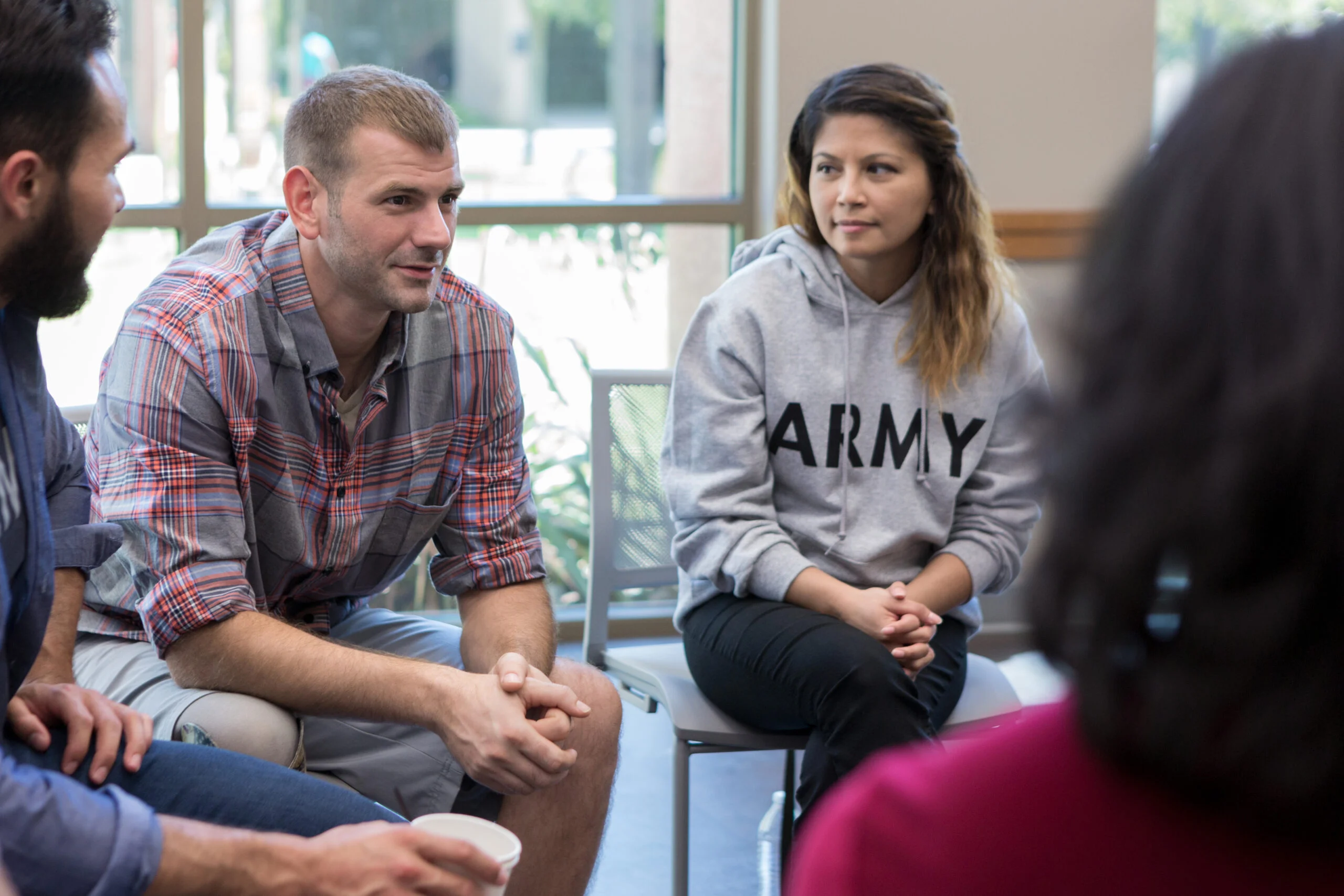
Peer support from others who have had similar experiences is also significant. There is something that happens when a person finally tells the story they have been most afraid to tell and discovers that the person across from them does not recoil, does not judge, and perhaps recognizes something of their own experience in it. That experience of being witnessed without condemnation is not a small thing. For many people, it is the beginning of the path back.
How Do I Know If I or Someone I Love Has Moral Injury?
The hallmarks are different from what most people associate with psychological struggle after service. If you or someone you love is experiencing any of the following, moral injury may be part of the picture.
A persistent sense of guilt or shame connected to something specific that happened, rather than a general anxiety or fear response. A feeling of being fundamentally changed by an event in a way that has never been fully processed or spoken about. Withdrawal from relationships, community, or faith that previously provided meaning and connection. Difficulty forgiving yourself for something that happened even when the people around you do not hold it against you. A belief, quiet or loud, that you do not deserve to feel better or that recovery is for other people but not for you.
None of these are permanent. All of them are addressable with the right kind of help. And none of them require you to have your story fully sorted before you reach out.
How Does Bluff Treat Moral Injury in Veterans and First Responders?
At Bluff, we understand that substance use in veterans and first responders is often the surface of something much deeper. Our clinical team is equipped to go there with you, not just to address the behavior but to address what has been driving it.
We treat substance use and co-occurring conditions together because we know that lasting recovery requires looking at the whole picture. We provide a level of clinical attention that is genuinely uncommon, with patients seeing a medical provider nearly every day of treatment. And we work with veterans and first responders who are carrying the specific weight that service leaves behind, including the kind that does not have a name most people have heard before now.
You do not have to have the words for what you are carrying before you reach out. You do not have to know whether what you experienced qualifies or whether you deserve help. Those are questions you work through with support, not prerequisites for getting it.
If something in this page has named something you have been living with, that is enough of a reason to call.
What Should a Family Member Do If They Recognize These Signs in Someone They Love?
Moral injury often shows up in relationships as distance, irritability, withdrawal, and a kind of unreachability that has nothing to do with how much the person loves the people around them. It can look like anger. It can look like indifference. It can look like someone who is present in the room and somewhere else entirely at the same time.
If that sounds familiar, your instinct to reach out is a good one. You can call us without your loved one knowing. You can ask questions, understand what they might be experiencing, and get guidance on how to approach a conversation when the time feels right. We talk with families every day who are in exactly the place you are in right now.
Recovery from moral injury is possible. It happens every day. And it almost always begins with someone deciding that the weight they have been carrying alone is finally worth sharing. Contact us today.