Losing the Structure: Substance Use Risk in the First Year After Leaving the Military
For years, the military told you when to wake up, where to be, what to wear and who had your back. Then one day, it stops. You turn in your gear, sign your paperwork and walk out into a civilian world that runs on completely different rules.
Every year, about 200,000 service members make this transition. Many of them describe the first year as one of the hardest of their lives, even if they were ready to get out. It’s also a time when drinking and drug use can quietly escalate.
On this Veterans Day, we want to talk honestly about why the first year after separation carries real risk, what warning signs to watch for and where veterans and their families can turn for help.
Why the First Year Is So Hard
Leaving the military isn’t just a job change. It can mean losing several things at once.
Structure. In the military, your days are scheduled for you. After separation, there’s suddenly no formation, no chain of command and no one checking whether you got up on time. That freedom can feel good at first, but for many veterans it becomes unsettling. Empty days are easy to fill with alcohol, especially when there’s nowhere to be in the morning.
Identity. “Soldier,” “Marine,” “Sailor” or “Airman” aren’t just titles. They become an identity. Without this, many veterans struggle to answer a simple question: What am I now? That loss can lead to depression, shame and a sense of drifting.
Community. Your unit lived, worked and trained together, and often went through hard things together. Civilian coworkers and neighbors may not understand what you’ve seen, and old friendships back home may feel different. Isolation is one of the strongest drivers of substance misuse.
Purpose. In uniform, your work had clear meaning. Civilian jobs can feel small by comparison, or hard to find at all. Financial pressure, job searches and a new benefits system can pile on stress.
Constant decisions. Where to live, what job to take, which school to attend, how to use your benefits and how to handle healthcare all at once. That kind of mental load can wear anyone down. We explore how it affects people in recovery in How Decision Fatigue Can Affect People Recovering From Addiction.
How Substance Use Can Escalate After Separation
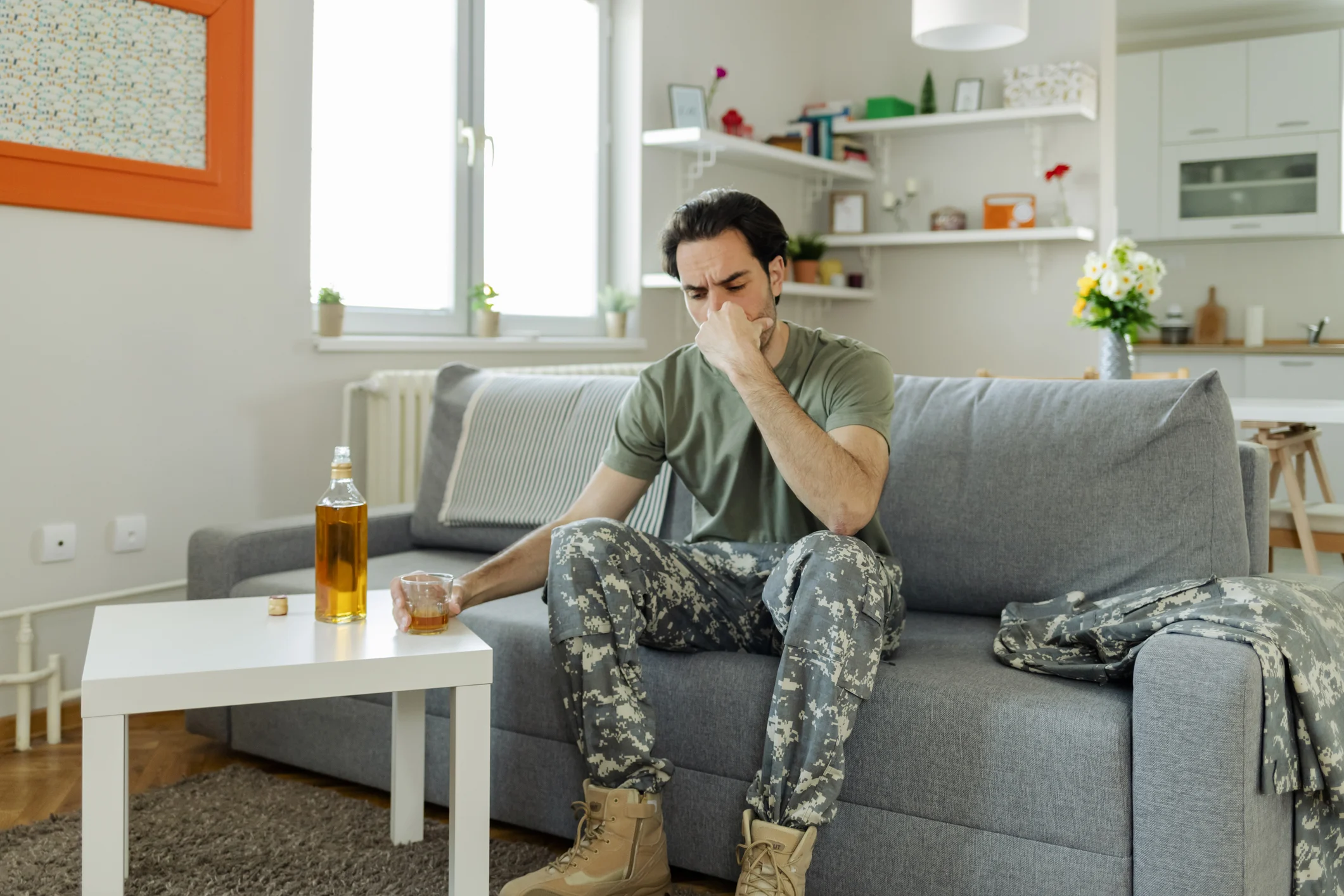
Drinking is often part of military culture, from unit gatherings to unwinding after a long week. In uniform, there were limits: duty hours, inspections, drug testing and leaders who noticed when something was off. After separation, those guardrails disappear.
Common patterns include:
- Drinking more often, or starting earlier in the day, because there’s no schedule to work around
- Using alcohol or cannabis to sleep, especially when nightmares, hypervigilance or chronic pain make rest difficult
- Relying on leftover or new prescriptions, such as pain medication from service injuries or sleep and anxiety medication
- Self-medicating trauma symptoms that stayed buried while there was a mission to focus on
- Drinking to fill the social gap, since bars and veteran gatherings can be one of the few places that feel familiar
Many veterans carry invisible injuries from service, including post-traumatic stress, traumatic brain injury and moral injury, the deep guilt or betrayal that can follow experiences that conflicted with their values. When the structure of military life is gone, these wounds often surface. Learn more in What Is Moral Injury and Why Is It So Common in Veterans and First Responders? and The Correlation Between Veteran Trauma and Addiction.
The Risk Is Real and It Peaks Early
Research shows the transition period is a high-risk time for veterans’ mental health. Large studies of service members who left the military have found that suicide rates are highest in the first year after separation, generally peaking between six and twelve months after leaving. Veterans who served less than two years face higher risk. Substance misuse, depression and a history of self-harm are among the strongest risk factors.
Many veterans who struggle during this period aren’t connected to VA care or any other support. That’s why reaching out early matters, before a rough patch becomes a crisis.
If you or a veteran you love is in crisis, call 988 and press 1, or text 838255, to reach the Veterans Crisis Line any time, day or night.
Warning Signs to Watch For
Whether you’re a veteran or someone who cares about one, these signs may mean substance use is becoming a problem:
- Drinking or using daily, or needing more to get the same effect
- Using alcohol or drugs to sleep, calm down or stop memories
- Withdrawing from family, friends or other veterans
- Losing interest in things that used to matter
- Anger, irritability or conflict that seems out of proportion
- Trouble keeping a job, finishing school or managing money
- Risky behavior, such as drinking and driving
- Talking about feeling like a burden or having no purpose
These aren’t signs of weakness. They’re signs that the transition has taken a heavier toll than expected.
Rebuilding Structure After Service
The skills that served you in uniform, like discipline, teamwork and perseverance, can help you build a strong civilian life. A few ways to start:
- Create your own routine. Set a consistent wake-up time, plan your days and build in physical training. Structure doesn’t have to come from a chain of command.
- Find your people. Veteran service organizations, peer support groups, volunteer work and veteran-friendly gyms can rebuild the sense of belonging you lost.
- Connect to care early. Enroll in VA healthcare, even if you feel fine. In Augusta, the Charlie Norwood VA Medical Center serves veterans across the region.
- Find a new mission. Purpose can come from work, school, family, faith, service or mentoring others making the same transition.
- Be honest about your drinking. If you’re drinking more than you did in uniform, take notice. It’s much easier to change course early.
- Address trauma directly. Evidence-based treatment for PTSD and related conditions can make a real difference, and it often reduces the urge to self-medicate.
Veteran-Focused Addiction Treatment in Augusta
Augusta has deep military roots, and Fort Eisenhower (formerly Fort Gordon) sends many service members back into civilian life every year. At Bluff, we’re proud to serve the veterans who call this region home.
Bluff is a certified Veteran Ready organization, and our Project Resilience program provides addiction treatment designed for veterans. We understand military culture and the challenges that follow separation, including co-occurring PTSD, depression and anxiety. Our care includes medically supervised detox, residential treatment and partial hospitalization, along with trauma-informed therapy and holistic treatment approaches that help veterans rebuild structure, connection and purpose.
You served your country. You deserve support for what comes next.
Call us at (844) 242-0806 or contact our admissions team to learn more about your options and benefits.